The Past, the Present, and the Owl of Minerva

I was born in Hong Kong and my family immigrated to Toronto, Canada when I was five years old. Being an immigrant shaped me profoundly. The experience of being on the outside looking in, of wanting and failing to fit into the dominant culture and at the same time cherishing a somewhat secret Chinese way of being (a lot of it surrounding food) – all this shaped my interior life and was something I struggled with well into my teens. When I got older and learned more about the colonial history of Hong Kong, I realized that Chinese identity was complicated for almost everyone in my family, many of whom emigrated in the 80s and 90s prior to the 1997 handover.
I am also a first-generation university graduate. As a child, I was offered a simple narrative about why we had to relocate, namely, out of fear of living under the authoritarian rule of communist China. Much of this was couched in terms of the freedom of education and its absolute rather than merely instrumental importance. To this day, when asked, my parents will claim that they immigrated for the sake of my education. The idea that a scholarly, intellectual life was worth pursuing for its own sake was thus never foreign to me, and many weekends were spent at the local public library devouring endless piles of books. What is striking to me now about my parents’ commitment to education was that it was neither a function of class privilege (they grew up in relative poverty) nor of their own personal experiences with educational institutions (neither went to college). And in contrast to the stereotypes of Chinese “tiger” parenting, my parents were continually and exceedingly supportive of my intellectual interests and educational choices. When I discovered philosophy through a course in high school taught by one of the most spirited teachers I ever had, it felt like a happy coincidence that the ideas and arguments that floated around our dinner table, in my head, in the music I listened to and the books I read, constituted a tradition and a discipline, something that one could study systematically and pursue professionally. With the guidance of my high school philosophy teacher, I read Plato, Nietzsche, and Marx, and unsurprisingly, became enamored with existentialism. On the verge of the anticipated self-reinvention that often comes with the transition to college, the freedom that accompanied the fact that existence preceded essence held an undeniable allure. Later I would conclude that the existentialist conception of freedom was deeply flawed, but at the age of eighteen, there could be nothing worse than falling into the trap of bad faith.
I did my undergraduate degree at the University of Toronto, where, without an understanding of disciplinary divisions and norms, I started out as a political science major thinking that this was the best way to pursue my burgeoning interest in social and political philosophy. Luckily, I also enrolled in some philosophy classes and quickly discovered that I wanted to spend nearly all my time reading for those courses, and reading all the philosophy I could get my hands on. My studies at U of T were heavy on the history of Western philosophy, and many of my professors placed a strong emphasis on the close reading of philosophical texts. I graduated as a “specialist” in philosophy (basically a super major with more philosophy classes) with a minor in women’s studies. Although I had planned for many years to apply to law school, I changed my mind and applied to MA programs in philosophy, deciding to attend the University of Essex. Like many new graduates, I was eager to travel and live in new places. After completing my MA, I moved to New York and eventually completed my PhD at the New School for Social Research.
I was extremely nervous about speaking up in class well into my graduate studies. Having grown up in Toronto, often cited as the most diverse city in the world, the lack of diversity within philosophy was not lost on me, which surely contributed – if not always consciously – to my self-doubt. Further complicating matters, I ended up specializing in nineteenth-century philosophy and Frankfurt school critical theory, writing a dissertation, and eventually a book, on Hegel – a towering symbol of Eurocentrism if there ever was one. Hegel considers the Chinese to be not “properly” historical, claiming that we lack the inwardness characteristic of subjective freedom and have no inherent moral consciousness, not to mention an unsophisticated language that is poorly suited for the development of philosophy and the sciences.
Hegel’s comments notwithstanding (no one can be right about everything), I feel unbelievably lucky that I was able to make philosophy my profession. At the risk of sounding hyperbolic, I really think it’s the best job in the world. Securing a job after graduate school felt like a miracle, and the dysfunctions of the academic job market, alongside the wider dysfunctions of higher education more broadly, are at this point widely documented. But there are some reasons to be (cautiously) optimistic about philosophy: the discipline appears to be increasingly committed to diversity efforts in a wide range of senses, whether this concerns the canon, previously neglected philosophical subdisciplines, pluralizing philosophical methods, the demographics of students and faculty, or expanding the reach of philosophy outside the academy into the broader concerns and debates of the public sphere. The institutionalization of these various efforts is surely a mark of progress, and I am hopeful that these efforts will have transformative effects on the discipline as a whole.
If being an immigrant was the most important defining feature of my childhood, then being a philosopher, or doing philosophy, is surely what shaped my entry into adulthood, to the extent that I have entered it. I am now around the same age as my parents were when they moved to Canada, and I often try to imagine my way into what that experience was like for them, moving to an unknown place with a young child, adjusting to a foreign language, searching for work and a new community. I have them to thank for my deep conviction that education at all levels is a fundamental public good that should be accessible to all, not merely due to its instrumental value, but as an end-in-itself.
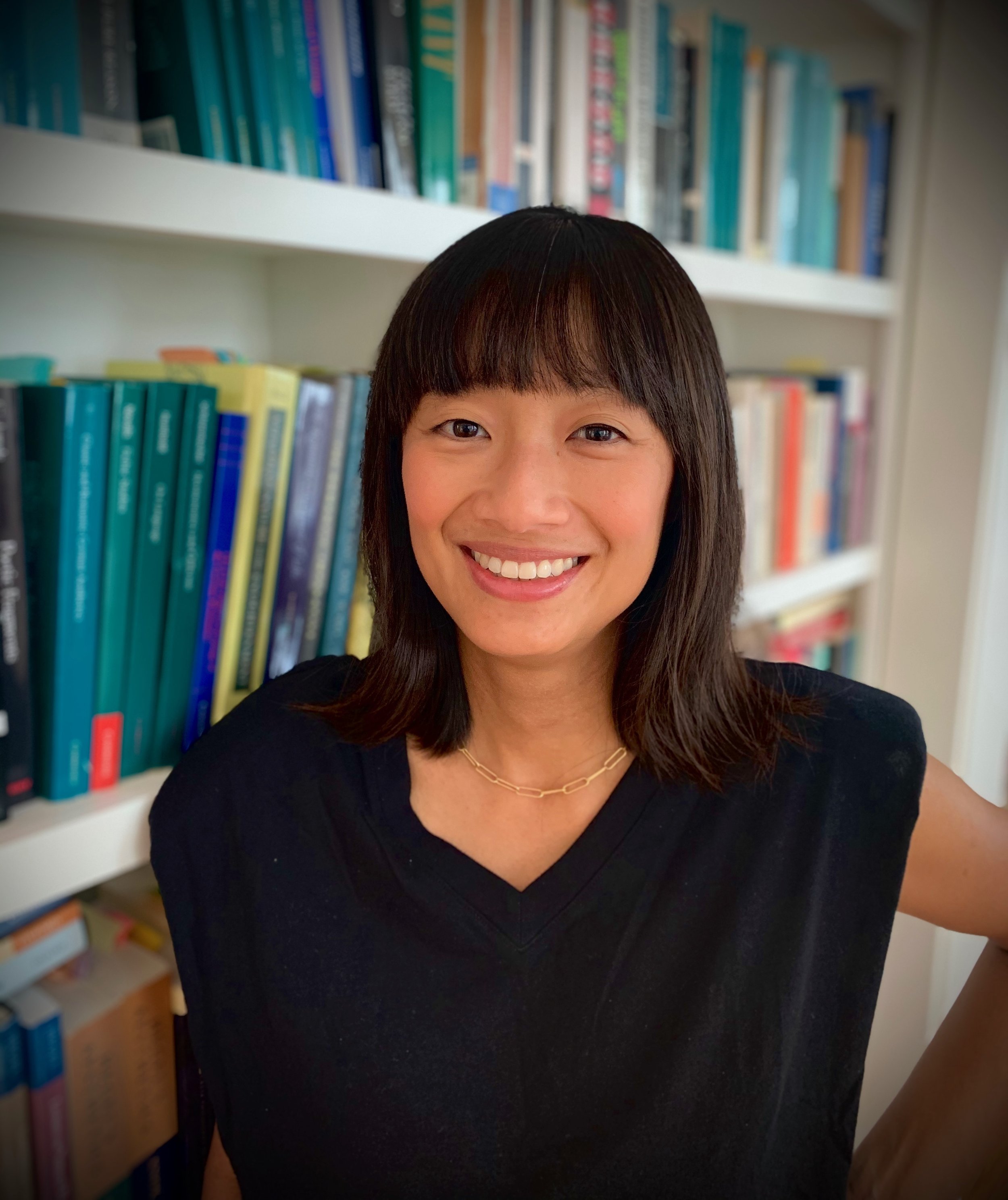
Karen Ng is Associate Professor of Philosophy at Vanderbilt University.
This contribution is an abridged and adapted version of a piece which was previously published in the Fall 2020 APA Newsletter, ‘What Is It Like to Be A Philosopher of Asian Descent?’, edited by A. Minh Nguyen and Yarran Hominh. Please find the full version of Ng’s paper here.
Published 1 October 2026