Escape Velocity
I grew up in what was once the industrial heartlands of England, in the Midlands city of Wolverhampton. The industry is now long gone, and in its wake there’s a lot of economic hardship. Growing up I didn’t know anyone from where we lived who had gone away to university. It just wasn’t something that was done. And yet, for some reason – I don’t quite recall what the original spur was – from an early age I had a burning desire not just to go to university but more specifically to be an academic. I somehow discovered that there are people out there who devote their lives to scholarship. This was fascinating to me and I decided that this was the life I wanted. So while my peers were saying that they wanted to be firemen or policewomen I was announcing that I wanted to be a professor! (I cringe at the thought of this now, of course). I learnt pretty quickly, however, that I should keep this dream to myself. The very idea that I might go to university, much less be an academic, was treated with such incredulity that it was better to pretend that one had other ambitions instead. And so I began my ‘undercover’ life. The plan to escape to university and become an academic never left me, but I kept it to myself throughout my childhood.
I knew that to make this goal happen I would need to finance it myself, as my parents wouldn’t be able to help (and that’s assuming that I could convince them that it was a good idea). My father worked long shifts at the local factory while my mother was a secretary in an elementary school. As soon as I could legally work – which was aged 12 – I took on part-time jobs, first delivering newspapers and then working in shops, gardening, bricklaying, even, at one point, digging graves. (The last of these jobs was by some margin the hardest physically, though it was also, not uncoincidentally of course, by far the best paid). A lot of my friends had part-time jobs too, but the big difference was that while they spent their earnings on fun stuff like computer games I had to make sure mine were being spirited away in a savings account, as I was going to need them.
I certainly did need them. While I was relieved to finally make it out of my hometown and get to university, the economic pressure never relented. Most of my time at university was spent living on the very limits financially. Although I worked my way through college, mostly with bar work, and lived frugally, it was very hard to keep my head above water. I never had a cushion of funds behind me, which made me very nervous. But it was worth it: university turned out to be everything I hoped it would be and I thrived there.
Here’s a funny thing that I realized when I got to college. I was now surrounded by people from comfortable middle-class homes who never had to worry about money. What struck me, however, was that my upbringing had been in many respects very valuable. For one thing, I had a work ethic that had become second-nature. This stands me in good stead even today. I’ve never had a problem getting motivated to work, the impetus to get on with it is just there. That’s priceless. For another thing, I had an appreciation of the academic life. If you feel lucky to be at university then you make the most of it.
That sense of appreciation is still with me today. How the hell did I manage to make it all the way from that housing estate in Wolverhampton to being – of all things – a professional philosopher? I still find myself marveling at it, especially now that I have the good fortune to work amid the palm trees and beaches of sunny southern California. It all seems unreal. I feel monumentally lucky to be an academic. (And I felt that way back when I was drenched by the Scottish rain rather than by the Californian sun). I know what a life of real hard work is like. It’s a blessing to be able to live a life of the mind instead. Sure, there’s admin and marking and so forth, but compared to the alternatives this way of life is a pretty good one to have, even when the teaching load gets heavy. I’ve never lost sight of that, and of course if you can appreciate things, then you enjoy life a whole lot more.
It’s an interesting question how my background has shaped my philosophical concerns. The influence is there, but it’s only apparent in retrospect. I think one way it’s influenced me is in how my instinct in ethical and political matters is to focus on the concrete and the practical rather than the general and the abstract. As William Blake memorably put it, we do good in ‘Minute Particulars’ and not by appealing to what he termed the ‘General Good’.
Here’s another influence. Although a lot of my research has focused on relatively abstract issues in epistemology, I’ve always been unusual in also doing work on applied and interdisciplinary topics. A good example of this is my interest in the philosophy of education and its application in a range of educational contexts, such as schools and prisons. I was especially drawn to a particular liberatory conception of education that is focused on the cultivation of intellectual character. To be educated is not just to learn useful skills and knowledge, but more importantly to acquire the capacity to think and judge for oneself. I think that’s the promise of education, especially higher education. It concerns me that so much of the education sector makes concessions to a purely instrumental view about the importance of education that loses sight of what good education is really about. If your own life has been completely transformed by education, as mine has been, then you are bound to take this issue especially seriously.
I suspect that my upbringing – and, in particular, my sense of intellectual isolation growing up – also had a bearing on why I was so drawn to the particular approach to philosophy found in Wittgenstein’s later writings. Like Wittgenstein, I think that engaging in philosophical inquiry inevitably generates a kind of estrangement from ordinary life. That in turn spurs further philosophical inquiry, but the effect is usually not to lessen this estrangement but to make it more acute. This was certainly my experience of encountering philosophy: as both invigorating and disorientating. This is where the later Wittgenstein’s quietist metaphilosophy becomes relevant. This is often interpreted as arguing that the purpose of philosophy is to undo the damage that philosophy causes, and thereby take one back to one’s prelapsarian state. I think this is mistaken. As I read Wittgenstein, there is no return to Eden for the philosopher. The point of philosophy is rather to enable one to see things aright so that one can gain an intellectual quietude – what the ancient Greeks called ataraxia – even in the midst of one’s estrangement. The reason why this is so difficult is because it involves recognizing features of our everyday practices that are normally hidden from view. This is not because anything is obscuring them, but because their ordinariness tends to make them invisible to us. Indeed, the utterly mundane, when it is finally viewed full-on, appears to us as uncanny. To see things aright is thus to gain a kind of intellectual understanding that only philosophy can avail us of, an understanding of both oneself and of the parts of the social and worldly fabric into which that self is interwoven. T. S. Eliot’s famous lines from “Little Gidding”, in his Four Quartets, seem apt:
“We shall not cease from exploration
And the end of all our exploring
Will be to arrive where we started
And know the place for the first time.”
Like Wittgenstein, I see philosophy as ultimately an activity rather than a body of doctrine. As an activity, it is essentially nostalgic, in its classical sense – i.e., a yearning for home, for an attunement that has been lost. But as Thomas Wolfe reminded us, it’s also true that one can never go home again. What philosophy can deliver, and which attracts people like me whose upbringing was characterized by intellectual estrangement, is peace of mind.
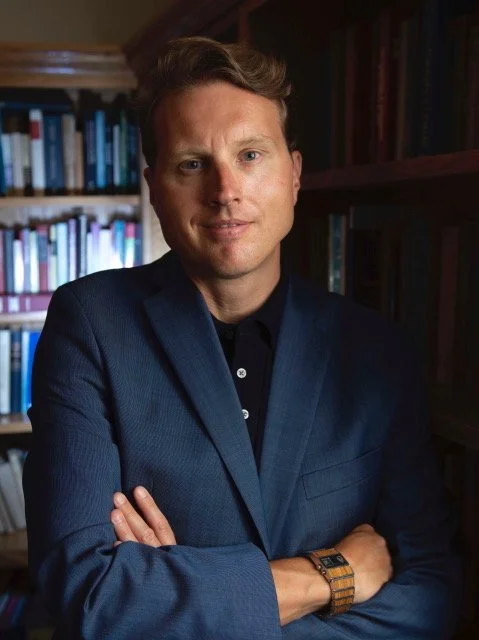
Duncan Pritchard is Distinguished Professor of Philosophy at the University of California, Irvine.
Published 1 September 2026