Grateful for a Mixed Bag
My story is one of success and not-success. No failure, but a mixed situation.
One of the reasons for this is that as a first generation university graduate I had unbounded enthusiasm but needed experienced advice that I did not receive. I had some fine teachers, and there were other reasons for the outcome; but this is one of them.
Probably there was a learned person among my ancestors. My paternal Ashkenazic side was from a village east of Warsaw, along the Russian border, where men often studied Torah. My maternal Sephardic side, from Constantinople and Rhodes, might have included a teacher among the half-millennia in the insular ghetto or in the ancient metropole. But no one at all whom I knew outside my family (beside schoolteachers) was learned. My Sephardic grandparents valued knowledge. My paternal relatives could not have cared less.
There was conflict between these two sides that contributed to deep conflict between my parents. In addition, we lived in a suburb of blue-collar bigots. I was plainly Jewish and also quite a gay child. At elementary school I was insulted, assaulted, and rejected in daily episodes. My father had been so wounded by anti-Semitism that he changed his, and our, name. For these and other reasons, my identity was precarious. Although we did not live in isolation, I was very much alone by circumstance, although my character disposed me to an active and solitary inner mental life.
In philosophy and history, however, I was safe. They helped me feel I could exchange the sadness, loneliness, and fears of my parents for a brighter life. I protected my identity inside these worlds. Everything desirable seemed to me to be in the past. At some point, the sharp accounts of philosophers in Will and Ariel Durant’s The Story of Philosophy, with its romantic portraits of the great thinkers, captivated me. I had a crush on Kierkegaard. Thinking for myself meant that I could make an identity for myself that I desired and that I could continuously fortify. For various reasons, any other field of creative activity was closed off to me.
Gillian Rose said that the first step necessary to being a philosopher is to fall in love with Socrates. This I had definitively done by age 15. I started reading earlier Greek philosophers and even took the bus to hear lectures about Parmenides at UCLA. This immersion protected me from many practical difficulties in my life. I assumed it always would.
Three other great influences worked together to pull me further. In the 1960s the counter-culture showed me, along with all my friends, that to live an authentic and truthful life was the right way to live politically and personally and that to do this requires a measure of opposition to one’s collectives, especially amidst a society of alienated commerce and superficial culture. This fit my impulse toward a moralizing view of life that must be due to the powerful, trans-historical moral orientation of Judaism. Finally, one teacher in high school spoke to this striving in me. He was not quite the first among my teachers who recognized it, but he was the most encouraging.
College, very far from home, was my Eden. The Yale philosophy department then had one of almost everything in its faculty, even a neo-Platonist. In my philosophy major I studied mostly Greek philosophy, chiefly Plato. But I took courses in other fields, read very widely, and went to many museums, concerts, and films. The warm social life I had there and the university structures supported my thinking.
When I came to graduate school at Chicago, these friendships (but one) and these structures were missing. The school, the department, and my cohort I found to be cold. The professor I wanted to study with was suddenly on leave for two years. The department chair wanted to deny me credit toward degrees for courses I took in the Divinity School and in Classics because “you can’t trust” those places. He finally relented, but only after a baffling and humiliating struggle.
I did not return after my MA. This mistake was due to the hostility of the department and to my being unable to grow there without the support that I still very much needed. I then turned to the side of my temperament that was oriented toward history. I went to the terrific book history program at Columbia Library School. This M.S. launched me into about 30 years of dealing with early printed books, which gave me a knowledge of the movement of ideas that few historians or philosophers then had; and it vastly broadened my sensibilities. I thought about philosophical ideas persistently through the course of my trade.
The time came, after three decades, when I wanted the academic life I had hoped and lost hope for. I took two more MAs in the history of ideas. I had hung onto my core issue that emerged when I as an undergraduate: finding and validating the place of the human amidst oppressive bureaucracy, commodified and now financialized capitalism, an increasingly brutalizing politics, life more and more dominated by machines, and at last trans-humanist impulses I regard as self-destructive. I set right to work at developing my approach to all this.
But four Masters do not equal a PhD. The result is now my anomalous situation – my mixed bag today. At 74 most jobs will not consider me, yet I am full of mental and physical energy. I have no PhD but am highly productive. My mission is developed through an area, philosophy of history, that I know to be central to the search for human meaningfulness but that most Anglophone philosophers barely know to exist; and I approach it through the tradition of personalism, a term that means nothing to most professional philosophers.
In addition, I have not had a dominant philosopher against whom I revolted in order to find my ideas. Nor have I spent much time refuting the views of others. I am syncretistic and prefer presenting an affirmative vision.
Had I become an academic through graduate school at that age I would not have been a very good one. I am a much better scholar and teacher for the decades I spent studying on my own and without the experiences into which I cast myself at mid-life.
Professionally, then, the result is a mixed bag. I have fought like hell to hold on to and lost (through no fault of my own) a pretty favorable adjunct position, though I’d like better opportunities. But nonetheless, my life made me the thinker that I am. What philosophy gives me is something very dear I have always sought. Despite the professional closed doors, as a person, philosopher, and a historian I am succeeding at living an authentic, meaningful, and loving life, in the only ways I know how, at arguing for such a life and at helping others to succeed in this.
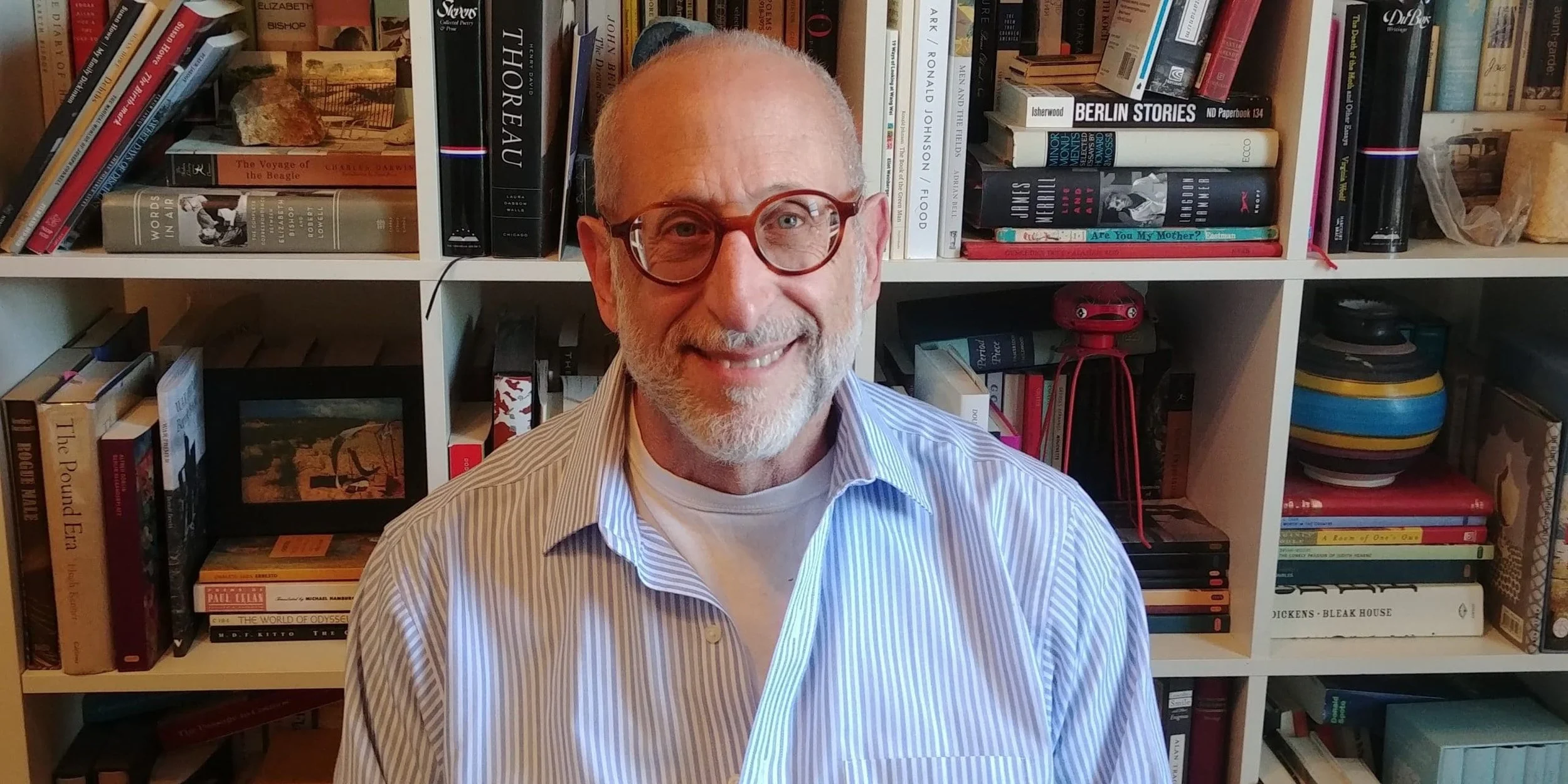
Bennett Gilbert is formerly Adjunct Assistant Professor of Philosophy and History at Portland State University, and currently Adjunct Instructor in Philosophy at the University of Portland.
Published 1 July 2026